
LED Screen Truss Capacity: A Comprehensive Guide
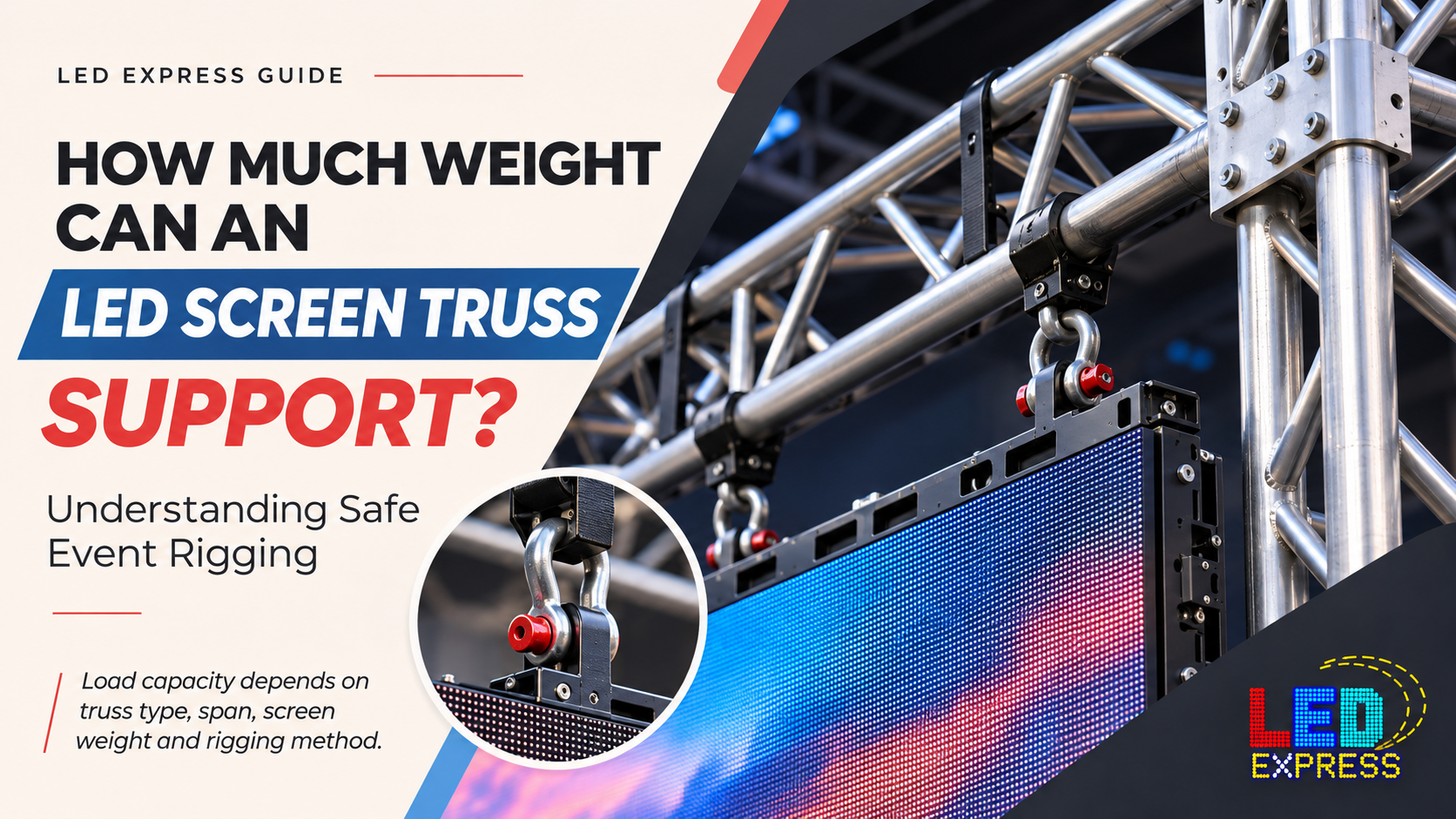
At LED Express, we understand that installing an LED video wall for a concert, church programme, conference or outdoor event requires more than selecting the right screen size. One of the most important considerations is whether the supporting structure can safely carry the display. Understanding LED screen truss weight capacity helps event organisers, production teams and installation professionals plan safer and more reliable LED screen setups.
LED screens can be heavy, especially when multiple cabinets are connected to create a large video wall. In addition, the supporting truss must accommodate rigging hardware and other equipment.
Therefore, knowing how much weight a truss can safely support is essential before installation begins.
What Is an LED Screen Truss?
An LED screen truss is a structural framework used to support or suspend LED video walls during events and installations.
Most event trusses are manufactured from aluminium and feature interconnected tubes arranged in triangular patterns. This design provides structural strength while keeping the framework relatively lightweight.
Trusses are commonly used in concerts, churches, exhibitions, conferences and entertainment venues.
Depending on the project, an LED video wall may be suspended from an overhead truss or installed using a purpose-designed ground-support system.
However, not every truss is suitable for supporting an LED screen.
Understanding LED screen truss capacity, the truss type, manufacturer, structural configuration and installation method all influence its safe working capacity.
How Much Weight Can an LED Screen Truss Support?
There is no single weight limit that applies to every LED screen truss.
The allowable load depends on the specific truss model, the distance between its supports, the positioning of the load and the way the complete structure is assembled.
For example, a short truss span may have a higher allowable load than a longer span of the same model.
Similarly, a truss carrying several evenly distributed loads may behave differently from one supporting a concentrated load at its centre.
Manufacturers provide load tables showing the allowable loading conditions for particular truss systems.
These tables may include values for uniformly distributed loads, centre point loads and other specified loading arrangements.
However, the published values are only applicable under the conditions described by the manufacturer.
Therefore, event organisers should never assume an LED screen truss capacity simply because it appears strong or has supported similar equipment previously.
A competent rigger or structural engineer must assess the complete installation.
LED Screen Weight and Cabinet Specifications
The first factor affecting LED screen rigging is the weight of the display itself.
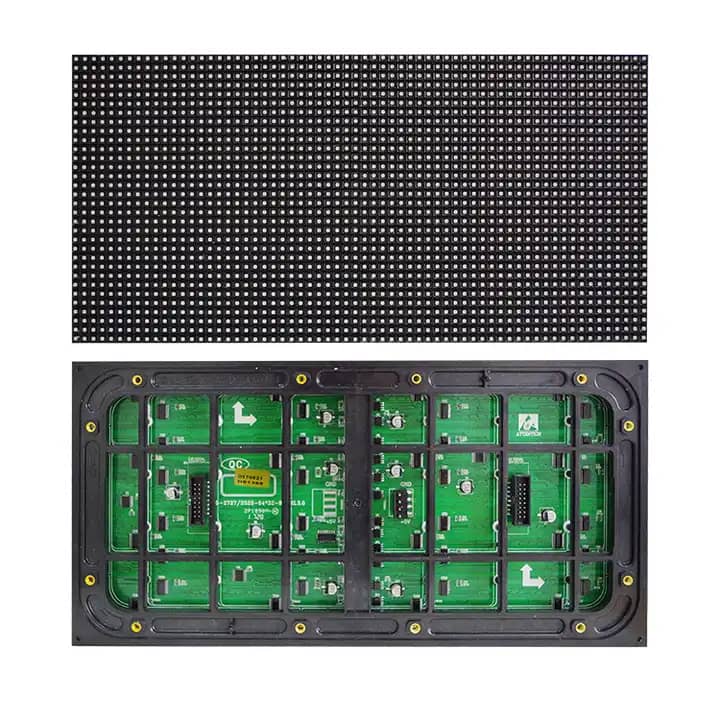
LED video walls consist of individual cabinets connected to form a larger screen.
Each cabinet contains LED modules, a supporting frame, receiving cards, power supplies and other components.
The total weight depends on the cabinet design, dimensions, materials and number of cabinets required.
For example, lightweight rental LED cabinets may place different loads on a support structure than heavier cabinets intended for permanent outdoor installation.
Before planning a suspended LED wall, obtain the manufacturer’s confirmed cabinet weight and approved rigging information.
Do not estimate an LED screen truss capacity based only on the screen’s physical dimensions.
Truss Span and Support Arrangement
Truss span refers to the distance between supporting points.
As the span increases, bending forces and deflection generally become more important.
For example, a truss spanning a small stage may have different loading limits from the same model extending across a large concert stage.
The number and position of supporting points also matter.
A truss supported at two points behaves differently from a continuous structure supported at three or more points.
Therefore, the correct loading information must match the actual configuration.
For more complex arrangements, a structural assessment may be necessary because simple manufacturer load tables cannot represent every possible installation.
Distributed Loads vs Point Loads
Understanding how weight is distributed is essential for safe LED screen rigging.
A uniformly distributed load is a load spread relatively evenly along a truss span.
A point load is a load applied at a particular location.
For example, an LED wall suspended through several hanging bars or rigging connections may create multiple concentrated loads along the supporting truss.
Although these loads may appear evenly spaced, their distribution depends on the actual rigging design.
A concentrated load near the middle of a span can produce different structural effects from a load positioned near a support.
Furthermore, placing several loads along a truss does not automatically mean that each support carries an equal share.
For this reason, technicians must consider the exact position of suspension points rather than evaluating total screen weight alone.
How to Estimate the Weight of an LED Video Wall
Before an event, organisers should establish the total weight of the proposed LED screen system.
A preliminary estimate can begin with the manufacturer’s cabinet weights.
For example, imagine an LED video wall measuring 4 metres wide and 3 metres high.
The display area is:
4 m × 3 m = 12 m²
If the selected cabinets have a hypothetical manufacturer’s specified mass of 30 kg/m², the estimated screen cabinet weight would be:
12 m² × 30 kg/m² = 360 kg
However, this figure represents only the assumed cabinet mass.
The complete rigging assessment must also account for relevant hanging bars, support frames, suspension hardware, cables and other supported equipment.
It must consider how these loads transfer through the truss, hoists, suspension points and supporting structure.
Important: This example is for understanding weight estimation only. It does not establish a safe LED screen truss capacity or approve any lifting arrangement.
Understanding Safe Working Load and Working Load Limit
When selecting rigging equipment, technicians may encounter terms such as Working Load Limit (WLL) and Safe Working Load (SWL).
These terms describe allowable loads associated with lifting or supporting equipment under defined conditions.
However, a rating printed on one component does not guarantee that the complete LED wall installation is safe.
For example, a rated lifting hoist may be connected to a truss with a different load limit.
The supporting building structure may also have restrictions on the loads permitted at particular rigging points.
Furthermore, suspension hardware, connectors and hanging accessories each have their own limitations.
Therefore, the entire load path must be checked.
The allowable loading of the installation depends on the combined engineering assessment, not simply the highest rating printed on an individual component.
Why LED Screen Hanging Bars Matter
Hanging bars are specialised accessories used to suspend compatible LED screen cabinets.
They transfer the weight of the display to the approved supporting structure.
Different LED screen manufacturers use different hanging systems.
Some systems allow cabinets to hang in vertical columns using dedicated locking mechanisms.
However, every system has limits on the number of cabinets that can be suspended and the configurations permitted.
Using unsuitable hanging bars or combining incompatible accessories can create serious safety risks.
Therefore, installers should use manufacturer-approved suspension hardware and follow the instructions for the specific LED screen model.
Why Outdoor LED Screen Rigging Requires Extra Planning
Outdoor LED video wall installations face additional challenges.
Unlike indoor venues, outdoor event locations may experience strong winds, rainfall and changing ground conditions.
These environmental factors can affect the stability of a suspended screen or ground-supported truss structure.
Wind Load
Large LED screens present a substantial surface area to the wind.
As a result, wind can create horizontal forces and overturning effects in addition to the vertical weight of the screen.
This means a structure that can safely support the screen’s weight indoors may not be suitable outdoors.
For example, an LED wall installed at an open-air concert may experience increased wind pressure during a storm.
The supporting structure must therefore be designed and assessed for the expected environmental conditions.
Ground Stability
Outdoor ground-support systems also depend on the condition of the installation surface.
Uneven ground, soft soil or unsuitable foundations can affect stability.
In addition, some systems require engineered base arrangements, ballast or bracing.
These measures must follow the structural design and manufacturer’s requirements.
Weather Monitoring
Outdoor event organisers should establish weather-monitoring procedures and a documented action plan.
The plan should identify the conditions under which an event must be paused, equipment lowered where the approved design permits, or the area evacuated.
Never rely on the screen’s weight alone to resist wind forces.
Common LED Screen Rigging Mistakes to Avoid
Several mistakes can compromise the safety of LED video wall installations.
These include:
- Using a truss without confirming its manufacturer and load rating.
- Suspending more LED cabinets than the approved system permits.
- Ignoring the weight of hanging bars, frames and other accessories.
- Assuming all rigging points carry equal loads.
- Mixing incompatible truss components or suspension hardware.
- Installing outdoor LED screens without assessing wind loads.
- Using damaged or unidentified rigging equipment.
- Suspending displays from unapproved venue structures.
- Allowing untrained personnel to perform lifting operations.
- Operating a suspended screen without the required inspection and safety documentation.
Avoiding these errors requires proper planning and competent supervision.
Importantly, no LED wall should be lifted above people unless the equipment, rigging arrangement and operating procedures have been assessed and approved for that application.
Ground-Supported vs Suspended LED Screens
LED screens can be installed using different support methods.
Suspended LED Screens
Suspended installations use approved hanging systems connected to overhead rigging points.
They are common in concert venues, exhibitions and large indoor productions.
This arrangement can free up floor space and provide a clear view of the screen.
However, it requires careful assessment of the truss, lifting equipment, hanging hardware and supporting roof or structure.
Ground-Supported LED Screens
Ground-supported installations use purpose-designed frames, bases and structural supports.
They may be suitable for event stages, conference venues and temporary displays.
However, ground support does not eliminate structural risks.
The system must still resist overturning, sliding and other relevant forces.
Therefore, choosing between suspended and ground-supported installation should depend on the screen design, site conditions and engineering assessment.
Why Professional LED Screen Rigging Matters
Poor rigging can damage expensive equipment, disrupt an event and endanger people.
A professional installation process involves more than attaching LED cabinets to a metal framework.
It requires the correct equipment, trained personnel, appropriate inspections and a verified support design.
Event organisers should also confirm that their technical team understands the installation procedures and emergency arrangements.
Furthermore, the venue’s management should approve the proposed rigging points and applicable site requirements before installation.
Professional planning helps reduce avoidable risks and supports smoother event production.
How LED Express Can Help With LED Screen Installation Planning
At LED Express, we believe that successful LED video wall projects begin with appropriate equipment selection and careful installation planning.
Whether you are preparing for a church programme, corporate conference, concert or outdoor event, understanding the screen’s structural requirements is an important step.
Choosing a suitable LED display involves considering cabinet weight, screen dimensions, installation method and available support arrangements.
In addition, any proposed truss or suspension structure must be assessed by appropriately qualified rigging and structural professionals.
By considering these requirements early, event organisers can reduce avoidable complications and make better decisions about their LED display projects.
Frequently Asked Questions
Can any aluminium truss support an LED video wall?
No. Aluminium trusses differ in design, size, structural capacity and intended use. The chosen system must be suitable for the proposed installation and supported by appropriate manufacturer documentation.
Does adding more truss supports increase the allowable load?
Not automatically. Additional supports change how forces are distributed within the structure. A qualified professional must assess the resulting load arrangement.
Is a lightweight LED screen always safer to rig?
A lighter screen generally reduces the equipment’s dead load, but weight alone does not determine safety. Wind, support geometry, suspension hardware and other factors still matter.
Can an indoor LED screen truss be used outdoors?
Only where the complete system is specifically suitable and approved for the intended outdoor conditions. Indoor-only rigging equipment should not be assumed safe for outdoor use.
Who should determine the safe loading of an LED screen truss?
A competent event rigger or suitably qualified structural engineer should assess the rigging arrangement using the relevant manufacturer specifications, engineering requirements and applicable safety standards.
Conclusion
Understanding LED screen truss capacity is essential for safe event rigging. The allowable weight depends on more than the size or appearance of the truss. Screen weight, span length, support positions, load distribution, suspension accessories and environmental conditions all influence the safety of an installation. Therefore, event organisers should avoid selecting rigging equipment based on assumptions or unverified weight limits.
Instead, they should obtain accurate equipment specifications and ensure that competent professionals assess the complete structure. With proper planning, suitable equipment and professional supervision, LED video walls can be integrated into events more safely and effectively.
Planning an LED Screen Installation for Your Next Event?
Are you organising a concert, church programme, conference, exhibition or outdoor event? Contact LED Express for guidance on LED screen specifications, product selection and installation planning. Ensure that your proposed LED video wall and supporting structure are properly assessed before installation.
