
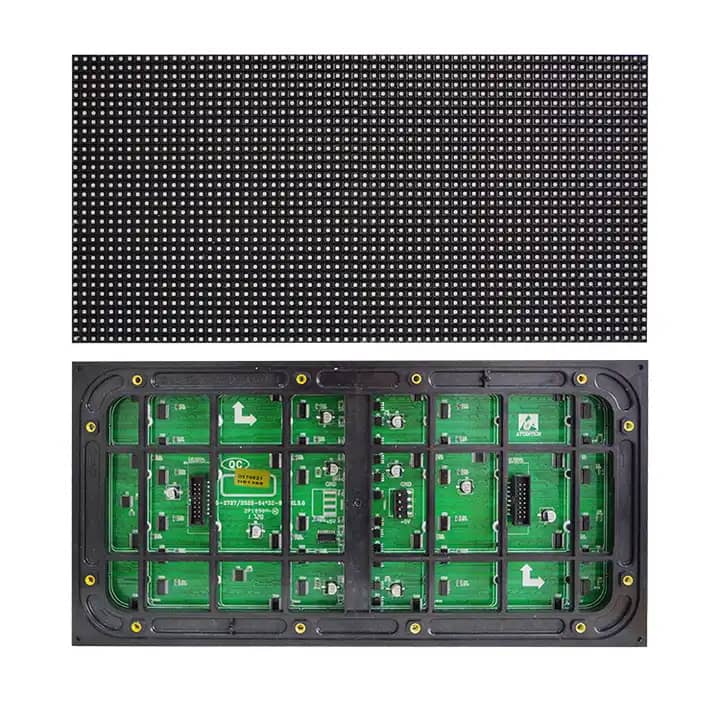
LED modules can go dark for several reasons, and a dark area does not automatically mean the entire LED screen needs replacing. In many cases, the fault is limited to a module, receiving card, power supply, cable, or connection. Identifying the source first can prevent unnecessary repair costs. Why LED Modules Go Dark One common cause is power failure. An individual module may stop lighting when its power connection, cable, or power supply develops a fault. However, data problems can create similar symptoms. A damaged data cable or receiving card may interrupt the signal reaching several modules. Physical damage is another possibility. Moisture, heat, dust, impact, or poor handling can affect components on the module. In outdoor installations, weather exposure makes proper cabinet sealing and maintenance especially important. What Does a Dark Module Mean for Repair? The pattern of the failure provides useful clues. If one module is dark while surrounding modules work normally, technicians can inspect its power and data connections properly before replacing anything. If an entire row or section goes dark, the receiving card, power supply, or the signal path may require closer attention. A diagnosis should check: Power reaching the module Data cable connections Receiving card status Power supply output Module components Signs of moisture or physical damage Practical Tip Do not repeatedly swap modules without identifying the fault. A replacement module may appear to solve the problem temporarily while the real issue remains in the power or data system. Conclusion Understanding why LED modules go dark makes repair decisions easier and more economical. With proper diagnosis, technicians can determine whether the solution requires a connection repair, component replacement, or a new module. If your LED display has dark modules or uneven sections, contact LED Express today for LED screen inspection, repair, maintenance, and technical support.
The control system determines how content reaches an LED display. Two common options are synchronous and asynchronous systems. Understanding a synchronous vs asynchronous LED control system setup helps buyers choose the right solution for their application. What Is a Synchronous System? A synchronous system displays content in real time from a connected source. For example, the LED screen may follow a laptop, video processor, camera feed, or media server. Therefore, synchronous control works well for concerts, churches, conferences, studios, and live events. Its main advantage is real-time control. However, the screen usually needs an active source device during operation. What Is an Asynchronous System? An asynchronous system stores content on a controller or media player. Once the user uploads the content, the screen can play it without a permanently connected computer. As a result, asynchronous systems work well for advertising screens, shop displays, information boards, and scheduled digital signage. Many systems also support remote updates through Wi-Fi, mobile networks, or cloud platforms. Which Should You Choose? Choose synchronous control when you need live video, presentations, or real-time switching. On the other hand, choose asynchronous control for scheduled advertisements, announcements, or repeated content. Some modern systems support both methods efficiently. Therefore, one controller can offer more flexibility. When comparing a synchronous vs. asynchronous LED control system, focus on how the screen will operate each day. At LED Express, controller selection starts with the client’s content and operating needs. Buyers should also consider who will manage the screen, how often content will change, and whether the display needs constant live input or independent playback. The right choice improves workflow, content delivery, system reliability, and overall ease of operation for the intended application. Planning an LED display project for your business? Contact LED Express today for professional controller selection, configuration, and installation support
Fine-pitch LED displays require compact components, high image quality, and strong thermal performance. As pixel density increases, manufacturers need better packaging methods. This is where flip-chip LED technology becomes important. In a conventional LED package, manufacturers often use wire bonds to connect the chip. Flip-chip designs turn the LED chip over and place its electrical contacts underneath. Why Does Flip-Chip Matter? This layout creates a shorter electrical path. As a result, current can move through the package more efficiently. In addition, the design can reduce reliance on delicate wire bonds. Fewer wire-bond connections may also reduce some potential failure points. Better Heat Management Fine-pitch displays place many LEDs close together. Therefore, heat can build up more quickly. Flip-chip LED technology can improve heat transfer from the LED chip into the supporting material. Better heat movement can support stable performance during long operating periods. Why It Suits Fine-Pitch Displays Fine-pitch LED screens need small components and tight spacing. Flip-chip designs support compact packaging while maintaining brightness and consistency. Furthermore, manufacturers may combine flip-chip architecture with other advanced packaging methods, including COB technology. Improved Reliability for Commercial Use Another advantage is long-term reliability. In commercial environments, displays may operate for many hours each day, so stable electrical and thermal performance matters. Flip-chip packaging can help support consistent output while reducing stress on internal connections. However, buyers should compare complete module quality, manufacturer standards, warranty support, and real-world operating conditions before deciding whether flip-chip is the right choice overall. Should Every Buyer Choose Flip-Chip? Not always. Buyers should still consider viewing distance, pixel pitch, brightness, serviceability, cabinet design, and budget. Therefore, the best technology depends on the application rather than one specification alone. At LED Express, proper screen selection starts with the installation environment and performance requirements. Planning a fine-pitch LED project? Contact LED Express for professional display specification and product-selection support.
An LED wall may look perfect to the human eye but appear very different on camera. Flicker, dark bands, moiré patterns, and poor exposure can reduce video quality. Therefore, a camera-friendly LED wall requires careful screen selection and proper setup. Choose the Right Refresh Rate Refresh rate affects how smoothly a camera records an LED display. A higher refresh rate usually reduces visible flicker and scan lines. However, buyers should confirm real screen performance instead of relying only on product labels. Match Camera Settings Camera frame rate and shutter speed should work well with the LED system. If they do not match, horizontal bands may appear on the recording. For this reason, technicians should test the cameras before the event starts. A short technical rehearsal can reveal flicker, colour shifts, or exposure problems before guests arrive or a livestream begins. Control Screen Brightness An LED wall that is too bright can overpower performers and create exposure problems. Therefore, adjust brightness to match stage lighting and camera exposure. Avoid running the screen at maximum brightness unless the environment requires it. Proper brightness balance also helps preserve skin tones and prevents the LED wall from appearing washed out or overexposed on camera. Choose the Right Pixel Pitch Pixel pitch also affects camera performance. Very fine patterns may create moiré with some lenses and camera positions. In addition, a good video processor helps control scaling, colour, resolution and signal switching. Camera distance, lens choice, viewing angle, and content design should also be considered because they can influence how the display appears in recorded footage. A well-designed camera-friendly LED wall combines the right screen, processor, brightness and camera settings. It should also undergo practical camera testing before the event. At LED Express, proper setup helps improve livestreams, weddings, concerts and corporate events. Planning a camera-facing LED installation? Contact LED Express for professional LED wall specification and setup support.
When wind strikes an LED billboard, it creates pressure across the display surface. The cabinets then transfer these forces to the supporting frame and foundation. At LED Express, we treat wind-load engineering as a critical part of outdoor LED screen planning. Larger screens expose more surface area to wind and may experience greater structural forces. However, screen size does not determine wind load on its own. Installation height, local wind speed, terrain, and screen orientation also matter. Nearby buildings can redirect wind and create turbulence. Likewise, the structural configuration can influence how the billboard handles these forces. Structural Engineering Comes First Before installation, a qualified structural engineer should assess the proposed site. The engineer can then determine the most suitable support system for the location. Depending on the project, the structure may use freestanding columns, wall-mounted frames, rooftop supports or purpose-built steelwork. Engineers must also evaluate cabinet connections, bolts, brackets and structural members. Each component should transfer forces safely through the structure. In addition, the foundation must resist overturning, sliding and movement caused by strong winds. Proper anchoring and balanced load distribution therefore play an extremely important role in long-term stability. Consider Maintenance and Environment A strong structure should still provide safe access for inspection and maintenance. Therefore, designers should include service routes, working clearances, and access points from the beginning. Outdoor conditions also require additional protection. For example, suitable coatings can help reduce corrosion. Proper drainage can prevent water accumulation. Furthermore, good electrical protection and weather-resistant components can improve reliability during harsh conditions. Ultimately, safe outdoor LED billboard installation requires more than a strong steel frame. Engineers must combine site assessment, structural calculations, suitable materials, and professional installation. Planning a large outdoor LED billboard with proper wind-load engineering? Contact LED Express today for professional site assessment, custom LED screen specification and installation support.
LED screens generate heat continuously during operation. Although LED technology is energy-efficient, power supplies, driver ICs, processors, and densely packed modules still produce heat, making LED screen overheating a constant risk. Therefore, effective thermal management is essential for maintaining reliable performance and extending component lifespan. What Causes LED Screen Overheating? One major cause is poor ventilation. When LED cabinets are installed too close to walls or enclosed without sufficient airflow, heat becomes trapped. Similarly, blocked ventilation openings, dust accumulation, and failed cooling fans can significantly reduce heat dissipation. Outdoor LED screens face additional challenges. Strong sunlight and high ambient temperatures increase the thermal load, while operating the display at high brightness for extended periods can further increase power consumption and heat production. Why Excessive Heat Matters Prolonged exposure to high temperatures places additional stress on power supplies, driver ICs, connectors, and electronic components. Consequently, overheating may contribute to colour inconsistency, brightness reduction, unstable performance, unexpected shutdowns or premature component failure. Improve LED Screen Cooling First, ensure adequate airflow around the LED cabinets. Where necessary, properly positioned fans, ventilation systems or air-conditioning may be required. Next, clean ventilation openings regularly and inspect cooling fans during routine maintenance. Brightness should also be adjusted according to environmental conditions rather than operating permanently at maximum output. Finally, thermal management should begin during installation. Cabinet spacing, airflow pathways and maintenance access should all be considered before mounting the screen. In addition, avoid placing heat-generating equipment too close to the cabinet and ensure that air inlets and outlets remain unobstructed. For outdoor installations, consider local ambient temperature, direct sunlight and enclosure design when planning the cooling strategy. Effective cooling improves reliability, protects sensitive electronics and helps maintain consistent image quality. Need help designing a reliable LED installation? Contact LED Express for professional LED screen specification, installation, and maintenance support.
A professional LED screen is more than a wall of glowing pixels. Behind every sharp image is a coordinated chain of LED screen components that process video, distribute data, and deliver power to thousands or millions of LEDs. The Video Processor The journey begins with the video processor. It receives content from sources such as a laptop, camera, or media player, then scales and prepares the signal for the LED display. From there, data is sent to receiving cards installed inside the screen cabinets. Receiving Cards Each receiving card manages a specific section of the display. It interprets incoming data and passes instructions toward the LED modules so every area of the screen displays the correct part of the image. Driver ICs Inside each module are driver ICs. These integrated circuits control how current reaches the individual red, green and blue LEDs. Their performance influences brightness control, grayscale, refresh behaviour and image consistency. This is one reason two screens with similar pixel pitch can produce noticeably different results. LED Modules The LED module is the visible building block of the screen. Multiple modules combine inside cabinets to create a larger seamless display. Modular construction also makes maintenance easier because faulty sections can often be replaced individually. Power Distribution Running alongside the signal system is the power-distribution network. Power supplies convert incoming electricity to the low-voltage DC power required by modules, receiving cards and other electronics. Proper distribution and protection are essential for stable operation. Understanding these LED screen components helps buyers look beyond screen size and pixel pitch. Processor quality, receiving cards, driver ICs, modules and power design all influence performance and reliability. At LED Express, we help clients select, install and maintain professional LED display systems engineered as complete solutions, not simply collections of panels.
Power instability can significantly shorten the lifespan of an LED display. Sudden electrical spikes, prolonged overvoltage, low voltage, and unstable generator output can instantly ruin delicate internal electronics, damaging power supplies, receiving cards, processors, and modules. For this reason, implementing proper LED screen power surge protection and voltage regulation should be considered a non-negotiable step in every professional display installation. Without a dedicated surge control strategy, even minor utility fluctuations or sudden switchboard trips can cause costly component failures and unexpected system downtime. Install Proper Surge Protection First, install a correctly rated surge protection device (SPD) within the electrical distribution system. An SPD helps divert short-duration voltage spikes before they reach sensitive LED components. However, surge protection works best when the installation also has effective earthing. Control Voltage Fluctuations A surge protector alone cannot correct sustained high or low voltage. Therefore, an automatic voltage regulator, voltage-monitoring relay or suitable power-conditioning system may be required. These devices help prevent the LED screen from operating outside its recommended voltage range. Use a Properly Sized Generator A generator should comfortably support the LED screen, processor and related equipment without operating continuously at maximum capacity. In addition, its voltage and frequency should stabilise before the screen is switched on. Protect Changeover Operations Switching repeatedly between grid power, generator, inverter or UPS can create electrical disturbances. For this reason, use a professionally installed automatic or manual changeover system. Sensitive equipment, including media players and video processors, may also benefit from a suitable UPS. Finally, correct cable sizing, circuit breakers, earthing, and routine electrical inspections work together to reduce avoidable failures. Proper LED screen power surge protection not only protects expensive components but also improves reliability and reduces unexpected downtime. Planning an LED screen project? Contact LED Express for professional electrical planning, installation, and power-protection support.
Before buying an LED screen, it is important to know how much electricity it may consume. LED screen power consumption affects your monthly running costs and influences the electrical system required for installation. LED screen electricity usage mainly depends on screen size, average power consumption per square metre, brightness level, and daily operating hours. Outdoor screens may use more electricity because higher brightness is needed in daylight. How to Calculate LED Screen Power Consumption First, calculate the screen area: Learn how to calculate LED screen electricity uptake and electricity costs in Nigeria using screen size, wattage, and local electricity tariffs. Screen Area = Width × Height For example, a 6 m × 3 m LED screen has an area of: 6 × 3 = 18 m² If the screen has an average power consumption of 250 W/m²: 18 × 250 = 4,500 W = 4.5 kW If the screen operates for 10 hours daily: 4.5 kW × 10 = 45 kWh/day For 30 days: 45 × 30 = 1,350 kWh/month To estimate the monthly electricity cost: Monthly Cost = Monthly kWh × Electricity Tariff At an illustrative tariff of ₦200/kWh: 1,350 × ₦200 = ₦270,000/month Always use the electricity rate on your bill, because tariffs vary across Nigeria and may change over time. Average vs Maximum Power Average power is useful for estimating electricity consumption and operating cost. Maximum power is more important when sizing generators, inverters, breakers, cables and circuits. Before purchasing an LED screen, ask your supplier for the average and maximum power consumption in W/m², recommended electrical supply, backup-power requirements, and available energy-saving features. Proper power planning helps prevent unexpected electricity expenses, overload, unstable operation, and undersized backup systems. It also allows buyers to compare different LED screens based on long-term operating cost, not purchase price alone. This is especially important for large commercial installations. Planning an LED screen installation? Contact LED Express for professional screen specification and power-planning support.
Receiving two or more quotations for an LED screen can be confusing, especially when the prices differ significantly. Does the cheaper quote offer better value, or are important details missing? A proper LED screen quotation comparison goes beyond the final figure. At LED Express, we’ve seen buyers save money in the long run simply by understanding what each quotation includes before making a decision. What to Check During an LED Screen Quotation Comparison A professional quotation should clearly explain what you are paying for. Before choosing a supplier, compare these essential items: Pixel pitch – Smaller pixel pitches produce sharper images and usually cost more. Screen brightness – Outdoor screens require higher brightness than indoor displays. Installation – Confirm whether labour, steel structures, wiring, and configuration are included. Warranty – Check the warranty period and what it actually covers. After-sales support – Reliable maintenance can save significant repair costs later. Moreover, ask whether accessories such as controllers, power supplies, spare modules, and surge protection are included. Missing components often increase the total project cost after installation begins. Look Beyond the Lowest Price The cheapest quotation is not always the smartest choice. For example, one supplier may use premium LED modules with higher refresh rates, while another uses lower-grade components that reduce image quality and lifespan. Therefore, comparing specifications instead of price alone helps you make a confident investment that delivers lasting value. Practical Tip Request a detailed breakdown of every quotation and compare each item line by line. If something is unclear, ask questions before signing any agreement. Conclusion A careful LED screen quotation comparison protects your budget and helps you choose quality over shortcuts. Understanding the details today can prevent expensive surprises tomorrow. Need help reviewing LED screen quotations? Contact LED Express for honest advice, transparent pricing, and premium LED display solutions tailored to your project.