

Flip-Chip LED Technology: Why It Matters for Fine-Pitch Displays
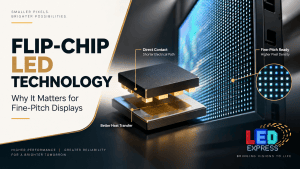
Fine-pitch LED displays require compact components, high image quality, and strong thermal performance. As pixel density increases, manufacturers need better packaging methods. This is where flip-chip LED technology becomes important. In a conventional LED package, manufacturers often use wire bonds to connect the chip. Flip-chip designs turn the LED chip over and place its electrical contacts underneath.
Why Does Flip-Chip Matter?
This layout creates a shorter electrical path. As a result, current can move through the package more efficiently. In addition, the design can reduce reliance on delicate wire bonds. Fewer wire-bond connections may also reduce some potential failure points.
Better Heat Management
Fine-pitch displays place many LEDs close together. Therefore, heat can build up more quickly. Flip-chip LED technology can improve heat transfer from the LED chip into the supporting material. Better heat movement can support stable performance during long operating periods.
Why It Suits Fine-Pitch Displays
Fine-pitch LED screens need small components and tight spacing. Flip-chip designs support compact packaging while maintaining brightness and consistency. Furthermore, manufacturers may combine flip-chip architecture with other advanced packaging methods, including COB technology.
Improved Reliability for Commercial Use
Another advantage is long-term reliability. In commercial environments, displays may operate for many hours each day, so stable electrical and thermal performance matters. Flip-chip packaging can help support consistent output while reducing stress on internal connections. However, buyers should compare complete module quality, manufacturer standards, warranty support, and real-world operating conditions before deciding whether flip-chip is the right choice overall.
Should Every Buyer Choose Flip-Chip?
Not always. Buyers should still consider viewing distance, pixel pitch, brightness, serviceability, cabinet design, and budget. Therefore, the best technology depends on the application rather than one specification alone. At LED Express, proper screen selection starts with the installation environment and performance requirements. Planning a fine-pitch LED project? Contact LED Express for professional display specification and product-selection support.
