


Moisture Damage in LED screens: The Silent Enemy
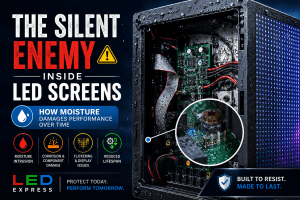
Most people think the biggest threats to LED screens are physical damage, poor installation, or unstable power supply. While those issues are important, there is another problem that quietly destroys many LED displays from the inside, and that silent enemy is moisture. Moisture damage in LED screens often develops slowly and silently. In many cases, businesses only notice the problem after flickering begins, colours become inconsistent, or components fail. At LED Express, we believe understanding hidden LED screen threats helps businesses protect their investment and extend screen lifespan.
How Moisture Enters LED Screens
Many people assume LED screens are completely sealed. However, moisture can still enter through:
- Tiny cabinet openings
- Damaged seal
- Poor installation
- Humid environments
- Sudden temperature changes
Over time, trapped moisture begins to affect internal electronic components. This is especially common in regions with high humidity and heavy rainfall.
Why Moisture Damage in LED Screens Is Dangerous
Unlike physical damage, moisture problems are not always visible immediately. Instead, the damage develops gradually inside the screen. Moisture can:
- Weaken solder joints,
- Damage receiving cards,
- Affect power supplies,
- Create corrosion,
- Aeduce display stability.
As a result, the screen may begin showing:
- Flickering visuals,
- Dead pixels,
- Colour inconsistencies,
- Sudden shutdowns.
Outdoor Screens Face Greater Risk
Outdoor LED displays experience more environmental pressure than indoor screens. Rain, humidity, heat, and dust constantly affect external cabinets. Therefore, outdoor installations require stronger protection systems and professional sealing. Without proper protection, moisture damage in LED screens can become a serious long-term problem.
Heat and Moisture Create a Dangerous Combination
Heat alone already stresses electronic components. However, when moisture combines with heat, the risk increases significantly. Warm environments can trap humidity inside cabinets, creating internal condensation over time. This condensation slowly affects:
- Chips
- Connectors
- Wiring
- Power systems.
Because the process happens gradually, many businesses do not realise the damage until repairs become expensive.
Poor Maintenance Increases Moisture Problems
Maintenance plays a major role in preventing internal damage. Without regular inspection:
Weakened seals go unnoticed,
airflow problems increase,
and moisture buildup remains hidden.
Routine servicing helps technicians identify early warning signs before major failures occur.
How Professional Protection Helps
High-quality LED installations include systems designed to reduce moisture risks.
These may include:
- Weather-resistant cabinets
- Proper ventilation
- Sealed connections
- Controlled airflow
- Professional cable management
In addition, regular maintenance helps preserve long-term performance.
Why Businesses Should Take Moisture Seriously
Many LED screen owners focus only on-screen brightness and size during purchase decisions. However, long-term durability depends heavily on environmental protection. A visually impressive screen can still fail early if internal moisture protection is ignored. Businesses that understand this make smarter long-term investments.
Conclusion
Moisture damage in LED screens is one of the most overlooked causes of screen failure. Although the damage often develops silently, its effects can become serious over time. Proper installation, quality materials, environmental protection, and regular maintenance all play a critical role in protecting LED displays from internal damage.
At LED Express, we help businesses install and maintain LED solutions built for long-term reliability and performance. Protect your LED investment with professional installation and maintenance solutions from LED Express. Contact LED Express today for durable, high-performance LED display solutions.
